
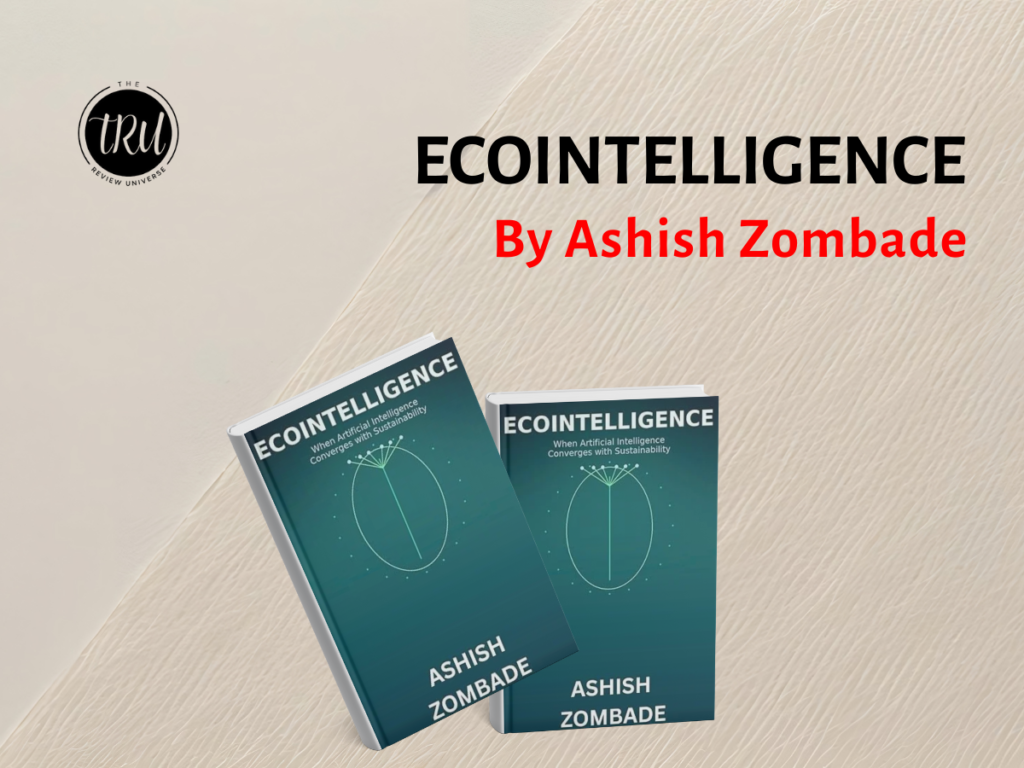
Introduction
Sustainability is no longer a question of intent. It is a question of infrastructure.
As climate risk accelerates, cities expand, supply chains strain, and capital reallocates at unprecedented speed, the gap between sustainability ambition and operational reality continues to widen. ECOINTELLIGENCE: When Artificial Intelligence Converges with Sustainability confronts this gap head-on with a clear, urgent thesis: sustainability will only scale when it is embedded into the same digital and financial systems that already govern the modern world.
This book reframes artificial intelligence not as a futuristic tool or ethical debate, but as foundational planetary infrastructure—a sensing, modeling, and decision-making substrate capable of operating from asset-level systems to Earth-scale governance.
Written with precision and policy-level clarity, EcoIntelligence is both a manifesto and a manual for those tasked with governing the global transition.
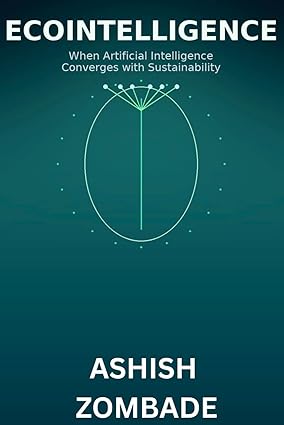
Book Details
| Detail | Information |
|---|---|
| Title | ECOINTELLIGENCE: When Artificial Intelligence Converges with Sustainability |
| Print Length | 192 pages |
| Language | English |
| Reading Age | 8 – 18 years |
| Publication Date | 16 November 2025 |
| Buy Link | https://amzn.eu/d/hL4Rrs7 |
Detailed Book Review
Redefining Progress in the Era of Sustainability 2.0
The book opens by challenging outdated definitions of sustainability—those focused on reporting, pledges, and static metrics. Instead, it introduces Sustainability 2.0, where progress is measured continuously, verified digitally, and governed through intelligent systems.
AI is positioned not as an assistant to sustainability, but as its decision substrate—capable of sensing environmental signals, modeling future states, and enabling real-time intervention. This reframing sets the tone for a book that prioritizes execution over aspiration.
AI as Planetary Sensing and Modeling Infrastructure
One of the book’s core contributions lies in its systematic breakdown of the sensing stack that underpins intelligent sustainability. The author explains how satellite data, IoT sensors, federated databases, and edge intelligence combine to form Earth-scale and city-scale digital twins.
These digital twins allow decision-makers to:
- detect climate and infrastructure risk early
- simulate interventions before deployment
- measure impact continuously and transparently
- move from reactive policy to predictive governance
Rather than abstract theory, these systems are presented as operational architectures already emerging across sectors.
Sector-by-Sector Application of EcoIntelligence
Across fifteen focused chapters, the book demonstrates how AI-driven sustainability operates in practice. Use cases span:
- Energy grids – optimizing load, resilience, and decarbonization
- Climate mitigation – verifying emissions reductions with MRV systems
- Industry – tracking material flows and efficiency at asset level
- Agriculture – monitoring land use, soil health, and productivity
- Urban systems – managing water, mobility, heat, and infrastructure
Each application is grounded in data architecture, modeling logic, and governance design—making the book highly practical for implementers.
Finance as Foundational Architecture, Not an Afterthought
A defining strength of EcoIntelligence is its treatment of finance as a core system, not a supporting layer. Carbon markets, nature markets, transition finance, and portfolio stress testing are all tied directly to machine-verifiable evidence.
The book argues convincingly that sustainability finance cannot function on trust-based reporting alone. Instead, it must be anchored in:
- auditable measurement, reporting, and verification (MRV)
- transparent provenance and data lineage
- AI-enabled risk pricing and scenario modeling
This integration ensures capital flows toward real impact rather than symbolic compliance.
Governance Aligned with Global Frameworks
A dedicated governance chapter aligns EcoIntelligence with major multilateral standards, including:
- UNFCCC frameworks
- OECD principles
- ISSB / IFRS sustainability disclosures
Rather than abstract alignment, the book proposes pragmatic standards for:
- model versioning
- data sovereignty
- equity and inclusion
- accountability across federated systems
Governance here is operational—built into systems rather than imposed externally.
Failure Modes and a Realistic 2050 Scenario
The final chapters address failure directly, without melodrama. The author catalogues system breakdowns—data gaps, misaligned incentives, governance inertia—and explains how EcoIntelligence mitigates them.
The book concludes with a realistic 2050 scenario: a managed planet where environmental risk is sensed early, priced accurately, and financed swiftly. Not a utopia, but a system capable of steering complexity rather than being overwhelmed by it.
Summary
ECOINTELLIGENCE is a systems-level blueprint for governing sustainability at scale. It replaces ESG theater and aspirational ethics with intelligent infrastructure, verifiable evidence, and executable governance.
This book is essential for:
- policymakers and ministers designing national platforms
- multilateral development bank teams
- utilities and city leaders modernizing operations
- corporate strategists moving beyond static ESG reports
- researchers building the AI foundations of sustainability
It is written for those who intend to govern the transition, not be governed by it.
Conclusion
ECOINTELLIGENCE: When Artificial Intelligence Converges with Sustainability makes one thing unmistakably clear: the sustainability transition will not succeed on goodwill alone. It requires intelligent systems capable of sensing reality, modeling risk, and enforcing accountability at scale.
This is not a sermon.
It is not speculative fiction.
It is a practical, policy-ready blueprint for managing a complex planet in the age of intelligent infrastructure.
Read More : Aria’s Compass By Parul Sharma: Finding Direction in the Storm of Growing Up