
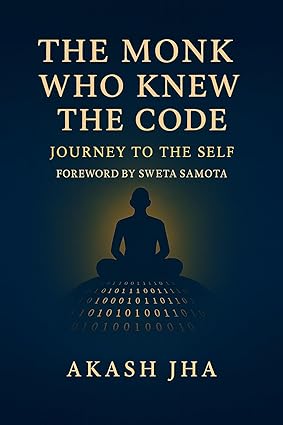
In an age where productivity is worshipped and burnout is normalized, stories that speak honestly to the inner exhaustion of modern professionals feel not just relevant but necessary. The Monk Who Knew The Code: Journey To The Self by Akash Jha enters this space as a calm yet powerful modern parable, blending Vedic wisdom with the lived reality of today’s hyperconnected world.
This is not a book about abandoning ambition. It is a book about realigning it.
Introduction: When Success Feels Like Failure
Aarav is everything society labels “successful” a skilled software engineer, financially stable, respected. Yet internally, his life feels fragmented. Burnout clouds his focus, anxiety erodes his confidence, and the person he once was feels distant, almost forgotten.
This quiet crisis so familiar to professionals today becomes the emotional engine of the story. When conventional fixes fail, Aarav does something radical: he steps away. His journey to the Himalayas is not an escape, but a confrontation with what he has been avoiding—himself.
The Turning Point: Wisdom Beyond Belief
In the solitude of the mountains, Aarav encounters a reclusive monk who introduces him to The Seven Codes of the Mind a framework rooted in Vedic philosophy yet strikingly modern in application.
These “codes” are not presented as doctrines to believe in, but as mental algorithms tools to be tested, applied, and experienced. The narrative cleverly bridges ancient wisdom with contemporary metaphors, making the insights accessible to readers from technical, entrepreneurial, and creative backgrounds alike.
As Aarav applies each code, he begins dismantling invisible patterns of distraction, self-doubt, and emotional overload. The transformation is subtle, grounded, and deeply human.
Themes That Resonate
What sets this book apart is its relevance to the present moment. It explores:
- Burnout as a signal, not a failure
- The cost of constant digital distraction
- The illusion of identity built on roles and achievement
- Forgiveness as a practical tool for mental clarity
- Purpose as alignment, not pressure
Rather than promising instant enlightenment, the book emphasizes return to focus, to meaning, to one’s natural state of calm awareness.
A Modern Parable for a Digital Generation
Readers who appreciated The Alchemist or The Monk Who Sold His Ferrari will recognize the familiar structure of a spiritual journey. However, The Monk Who Knew The Code feels distinctly contemporary speaking directly to screen fatigue, notification anxiety, and the mental noise of modern life.
The parable format keeps the book light and readable, while the ideas linger long after the final page.
Book Details
| Detail | Information |
|---|---|
| Title | The Monk Who Knew The Code: Journey To The Self |
| Author | Akash Jha |
| Language | English |
| Print Length | 100 pages |
| Publication Date | 17 December 2025 |
| Genre | Spiritual Fiction / Modern Parable |
| Buy Link | https://www.amazon.in/dp/B0G7SP8Y45 |
About the Author – Akash Jha
Akash Jha is a storyteller who blends technology, mindfulness, and imagination. With a background in IT, he understands the pressures of modern professional life making Aarav’s journey feel authentic rather than idealized.
Akash is also the creator of the Ayurvedic Adventures children’s series and draws inspiration from travel, long walks, and nature. His writing consistently reflects a belief in mindful living, clarity, and growth without force.
Who Should Read This Book?
This book is especially suited for:
- Professionals experiencing burnout or loss of direction
- Young entrepreneurs and engineers seeking clarity
- Readers interested in spirituality without dogma
- Anyone feeling overwhelmed by noise, speed, and expectation
Final Verdict
The Monk Who Knew The Code doesn’t promise escape from life’s demands. Instead, it offers something more sustainable: a way back to yourself while staying fully engaged with the world.
Quiet, thoughtful, and deeply relevant, this book feels like a conversation you didn’t know you needed one that gently asks you to pause, listen, and remember who you are beneath the noise.