
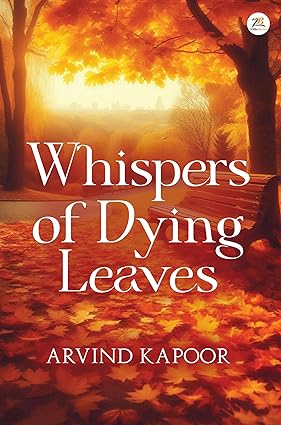
Poetry often finds its greatest strength not in grand declarations but in quiet truths. It reaches into the hidden corners of human experience, giving voice to emotions that are difficult to express and even harder to understand. Whispers of Dying Leaves by Arvind Kapoor is a beautiful example of this power. Through reflective verses, evocative imagery, and meditative observations, the collection invites readers into a deeply personal exploration of suffering, resilience, solitude, and hope.
Rooted in nature and infused with emotional honesty, this collection unfolds like a gentle conversation between the human soul and the changing seasons. It is a book that encourages readers to slow down, listen carefully, and find meaning within life’s cycles of loss, growth, and renewal.
For poetry lovers who appreciate contemplative writing and nature-inspired reflections, Whispers of Dying Leaves offers a memorable and moving experience.
Book Details
| Detail | Information |
|---|---|
| Book Title | Whispers of Dying Leaves |
| Author | Arvind Kapoor |
| Genre | Poetry, Contemporary Poetry, Nature Poetry, Reflective Literature |
| Language | English |
| Print Length | 74 Pages |
| Reading Age | 3 Years and Up |
| Publication Date | 26 January 2026 |
| Format | Paperback / Kindle Edition |
| Best For | Poetry enthusiasts, reflective readers, nature lovers, mindfulness practitioners |
| Book Link | https://amzn.in/d/0170ONw6 |
A Collection Rooted in Human Emotion
At its heart, Whispers of Dying Leaves is an exploration of emotional landscapes.
The poems guide readers through experiences of sorrow, loneliness, longing, healing, and self-discovery. Rather than offering dramatic declarations, the collection embraces subtlety and introspection. Each poem feels like a moment of quiet reflection, allowing readers to connect with emotions that are both deeply personal and universally recognizable.
The collection captures the complexity of human experience while maintaining a sense of gentleness and compassion throughout.
This emotional authenticity is one of the book’s greatest strengths.
Nature as a Companion to the Soul
Nature plays a central role throughout the collection.
Changing seasons, falling leaves, shifting skies, flowing water, and gentle winds become symbols for emotional transformation and personal growth. Rather than serving merely as background imagery, the natural world acts as an active participant in the poems.
The relationship between nature and emotion creates a powerful sense of harmony. As the seasons evolve, so do the emotional states explored within the verses.
This connection reinforces the collection’s recurring message that change, loss, and renewal are natural parts of life.
Readers who enjoy nature-infused poetry will find much to appreciate in these beautifully crafted images.
From Darkness Toward Light
A recurring theme throughout the collection is the journey from suffering toward healing.
The poems acknowledge pain without becoming overwhelmed by it. They explore grief, uncertainty, and emotional wounds while simultaneously offering glimpses of hope and resilience.
This gradual movement from darkness toward light gives the collection a meaningful emotional arc.
Rather than presenting healing as immediate or effortless, the poems suggest that recovery often unfolds slowly through reflection, acceptance, and courage.
The result is a collection that feels both honest and uplifting.
Soliloquy of Seasons: Haiku and Impermanence
One of the most distinctive elements of the book is the inclusion of Soliloquy of Seasons, a cycle of haiku woven throughout the collection.
These concise poems capture fleeting moments of beauty and transience. Through images of wind, water, light, and falling leaves, the haiku reinforce the collection’s broader themes of impermanence and transformation.
The simplicity of these verses creates moments of stillness that encourage contemplation.
Much like a visual raga unfolding across time, these poems leave behind emotional echoes that linger long after they are read.
Poetry as Reflection and Solace
Many contemporary poetry collections focus on expression. Whispers of Dying Leaves goes a step further by creating space for reflection.
The poems invite readers to pause and listen inwardly. They encourage mindfulness and self-awareness rather than offering definitive answers.
For readers navigating difficult periods of life, the collection may serve as a source of comfort and reassurance. Its gentle tone and compassionate perspective make it particularly suited to moments of personal reflection.
The book reminds readers that even during life’s most challenging seasons, hope and renewal remain possible.
Who Should Read This Book
This collection is highly recommended for:
- Poetry lovers
- Readers seeking emotional and reflective literature
- Nature enthusiasts
- Mindfulness and meditation practitioners
- Individuals navigating grief, healing, or personal growth
- Fans of contemporary and lyrical poetry
- Readers who enjoy haiku and nature-inspired verse
Final Review
Whispers of Dying Leaves is a thoughtful and beautifully crafted poetry collection that explores the delicate balance between sorrow and hope, solitude and connection, endings and renewal.
Arvind Kapoor combines emotional honesty with rich natural imagery to create poems that feel intimate, contemplative, and deeply human. The collection’s gentle wisdom encourages readers to embrace life’s cycles rather than resist them, finding beauty even within moments of uncertainty and loss.
The inclusion of Soliloquy of Seasons adds further depth, reinforcing themes of impermanence, transformation, and resilience.
For readers seeking poetry that offers comfort, reflection, and inspiration, Whispers of Dying Leaves is a rewarding and meaningful journey.