
Introduction
Some thoughts only appear when the world becomes quiet.
At 3AM, when distractions disappear and there is nowhere left to hide from your own memories, feelings often become clearer. Midnight Letters by Monica Venkatesh captures that intimate space between memory and realization, where the things left unsaid finally find a voice.
Described as a journal of almosts, aftermaths, and aching clarity, the book explores the emotional weight of what could have been, what actually happened, and what eventually broke. It is a reflective work for readers who have experienced unfinished stories, difficult endings, and the kind of thoughts that return when everything else is silent.
Book Details
| Book Details | Information |
|---|---|
| Book Title | Midnight Letters |
| Author | Monica Venkatesh |
| Genre | Poetry, Reflections, Emotional Writing |
| Print Length | 250 pages |
| Language | English |
| Publication Date | 30 May 2026 |
| Book Link | Amazon India |
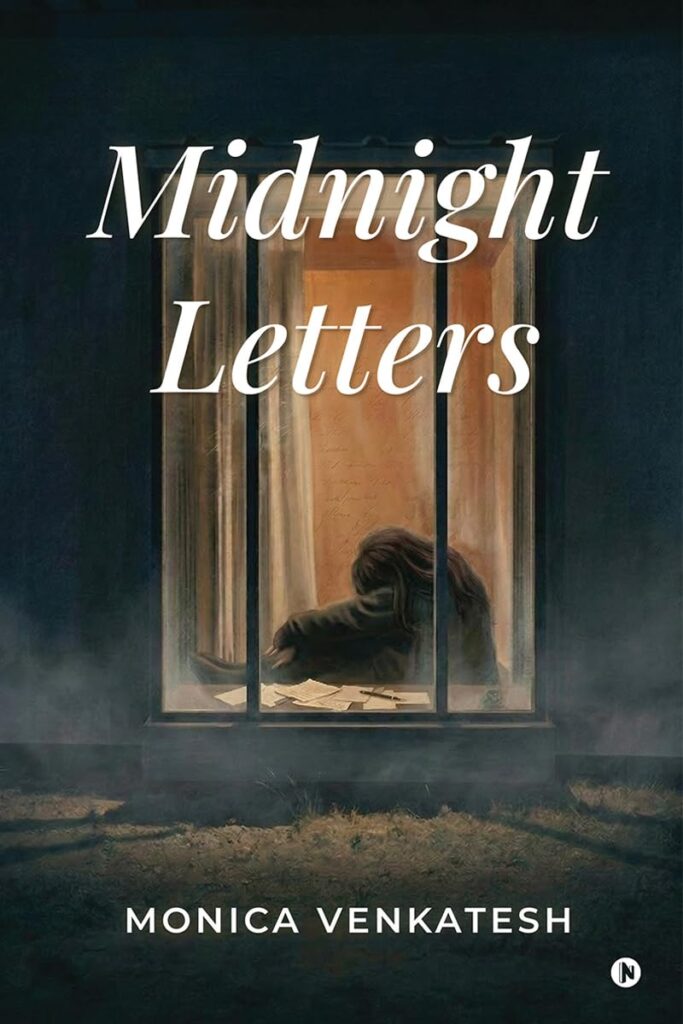
When the Night Makes Us Honest
There is something different about thoughts that arrive in the middle of the night.
During the day, responsibilities, conversations, work, and everyday distractions can keep difficult emotions at a distance. But when everything becomes quiet, memories often return with surprising clarity.
Midnight Letters appears to inhabit precisely this emotional space.
Its description, “In the hush of 3AM, truths spill like ink,” immediately establishes the atmosphere of the book. It suggests writing that is personal, introspective, and emotionally honest.
Rather than presenting a polished version of life, the book turns toward the moments that are usually harder to explain.
The Weight of Almosts
One of the central ideas behind Midnight Letters is the idea of the almost.
Almost relationships. Almost beginnings. Almost endings. Almost becoming the person we imagined we would be.
An “almost” can sometimes be more difficult to process than a definite ending because it leaves questions behind. What if things had happened differently? What if another decision had been made? What if someone had stayed?
These questions rarely have simple answers.
Through its concept of letters and reflections, the book creates space for those unresolved emotions. It reminds readers that not every story receives the ending we expected, and not every unanswered question needs an immediate answer.
What Was and What Broke
The description of Midnight Letters is built around three simple but powerful ideas:
What could have been.
What was.
What broke.
Together, these represent different stages of emotional reflection.
“What could have been” belongs to possibility and imagination.
“What was” belongs to memory and reality.
“What broke” belongs to loss, disappointment, and acceptance.
Moving between these spaces can be emotionally difficult. Yet it can also be part of understanding ourselves and the experiences that have shaped us.
A Journal of Emotional Clarity
Calling Midnight Letters a journal gives the book a particularly personal quality.
A journal is often where people allow themselves to say what they cannot say anywhere else. It does not necessarily require an audience, an explanation, or a carefully constructed conclusion.
That makes the concept of Midnight Letters relatable to anyone who has ever written a message they never sent, replayed an old conversation, remembered someone unexpectedly, or wondered how a different choice might have changed everything.
The book seems to transform those private moments into written reflections that readers can recognize within their own experiences.
Finding Meaning in the Aftermath
Not every emotional experience ends when the event itself ends.
Sometimes the aftermath lasts much longer.
A relationship may end, but the memories remain. A friendship may change, but the questions remain. A dream may disappear, but the person continues wondering what might have happened.
The aftermath is where reflection begins.
Midnight Letters focuses on this emotional territory, allowing readers to sit with the feelings that remain after something important has changed or ended.
Rather than rushing toward easy answers, the book’s premise suggests that clarity can emerge gradually through reflection.
For Readers Who Carry Unfinished Stories
Midnight Letters may particularly resonate with readers who enjoy emotional and introspective writing.
It speaks to people who understand the strange feeling of remembering something long after it has happened. It is for those who have experienced heartbreak, uncertainty, regret, nostalgia, or the quiet process of letting go.
The book’s appeal lies in its simplicity. It does not need an elaborate premise to explore something deeply human.
Sometimes a few honest words about loss, memory, and possibility are enough to make a reader pause and think about their own story.
Conclusion
Midnight Letters is built around a simple but familiar human experience: the thoughts that become impossible to ignore when the world goes quiet.
Its exploration of almosts, aftermaths, and aching clarity gives the book an emotional and reflective character. It invites readers to revisit the things that could have been, acknowledge what was, and understand what broke.
Because sometimes healing does not begin with forgetting.
Sometimes it begins with finally putting the words on paper.