
How did the introduction of stereo recording change the way people experience music? In STEREO AS TRANSFORMATION: The Artistic Revolution of Two-Channel Sound, Lincoln Moura explores the transition from monophonic sound to stereo and examines how this technological development transformed the artistic possibilities of recorded music.
Before stereo, recordings presented music through a single channel, bringing every instrument and voice together into one unified sound. Although mono recordings had their own character and artistic value, they offered limited spatial separation between performers. An orchestra could sound like a single wall of music, while the individual elements of a jazz quartet competed for space within the same sonic field.
The arrival of two-channel recording introduced a new dimension. By allowing sounds to occupy different positions across the listening space, stereo changed not only how music was reproduced but also how listeners could perceive the relationships between instruments, voices, and their surroundings.
Book Details
| Detail | Information |
|---|---|
| Book Title | STEREO AS TRANSFORMATION: The Artistic Revolution of Two-Channel Sound |
| Author | Lincoln Moura |
| Publisher | Simplíssimo |
| Publication Date | August 24, 2026 |
| Language | English |
| Print Length | 75 pages |
| Amazon Link | Read on Amazon |
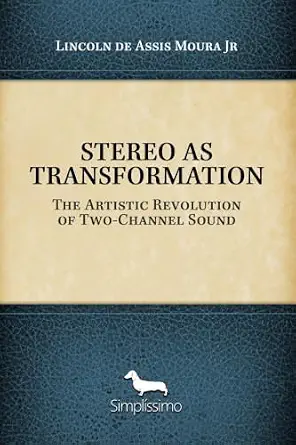
Review of STEREO AS TRANSFORMATION
One of the most interesting aspects of STEREO AS TRANSFORMATION is its treatment of stereo as more than a technical improvement. The book presents the transition to two-channel sound as an artistic revolution that changed the possibilities of musical recording and listening.
The discussion of mono recording establishes an important foundation. Rather than dismissing monophonic sound as inferior, the description recognises its coherence, established recording practices, and ability to create convincing musical experiences. Musicians, arrangers, engineers, and listeners had developed a rich relationship with mono, making the transition to stereo a change in artistic perspective rather than simply a replacement of an unsuccessful technology.
The arrival of stereo introduced the possibility of spatial depth and separation. Listeners could begin to perceive greater distinction between a trumpet and a bass, or between a singer and the room around them. These differences could transform the listening experience by making the arrangement feel more like a collection of performers occupying a shared space.
This shift also raises fascinating questions about the relationship between technology and creativity. When recording technology changes, the ways artists arrange, produce, and present music can change with it. Stereo therefore represents not just a different method of delivering sound, but a new way to think about how musical elements relate to one another.
Another appealing aspect of the book’s premise is its focus on perception. Sound recording is not merely about capturing musical information; it also shapes how that information reaches the listener. By highlighting the contrast between a single sonic plane and a more spatial presentation, Moura invites readers to reconsider something that modern listeners may take for granted.
At 75 pages, the book offers a focused exploration of a subject that connects audio technology, musical artistry, and the history of listening. It may particularly interest audiophiles, music enthusiasts, recording professionals, and readers curious about how technological innovations reshape artistic expression.
Final Thoughts
STEREO AS TRANSFORMATION by Lincoln Moura explores a defining change in recorded music: the movement from a single channel of sound to a two-channel experience that creates new possibilities for musical space and presentation.
By recognising the artistic value of mono while examining the possibilities introduced by stereo, the book encourages readers to appreciate how technology can influence the way music is created, recorded, and experienced.
For readers interested in audio history, recording techniques, and the relationship between technology and art, this book offers an intriguing perspective on the evolution of sound.