
Introduction
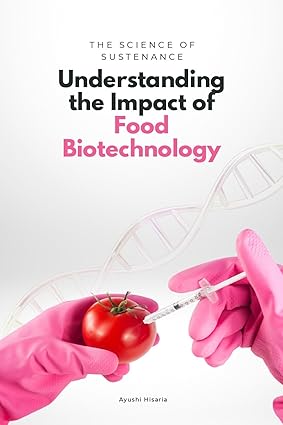
As the global population grows and environmental pressures intensify, the question of how we sustainably feed the world has never been more urgent. The Science of Sustenance: Understanding the Impact of Food Biotechnology steps into this critical conversation by examining how biotechnology is transforming modern food systems.
Rather than presenting biotechnology as a distant scientific concept, this book positions it as a practical, evolving solution to real-world challenges—food security, sustainability, environmental protection, and ethical responsibility. It invites readers to move beyond fear or blind acceptance and instead engage with food biotechnology through informed understanding.
Book Details
| Detail | Information |
|---|---|
| Title | The Science of Sustenance: Understanding the Impact of Food Biotechnology |
| Publisher | Walnut Publication |
| Author | Ayushi Hisaria |
| Language | English |
| Publication Date | 27 January 2025 |
| Genre | Food Science, Biotechnology, Sustainability |
Detailed Book Review
Building the Foundation: What Is Food Biotechnology?
The book opens with a clear and accessible overview of food biotechnology, grounding readers in its historical evolution and scientific foundations. From early agricultural innovations to modern genetic engineering, the narrative traces how biotechnology has steadily reshaped food production over time.
Complex concepts such as genetic modification, bioengineering, and molecular techniques are explained in a structured, reader-friendly manner, making the book suitable not only for academics but also for policymakers, students, and informed general readers.
From Laboratory to Table: Biotech Foods in Everyday Life
One of the book’s strengths lies in its exploration of real-world applications. It examines currently available biotech foods, illustrating how biotechnology enhances crop yield, nutritional value, pest resistance, and shelf life.
Rather than overselling innovation, the author carefully balances promise with realism—acknowledging both the successes and the limitations of biotech food solutions. This grounded approach strengthens the book’s credibility and relevance.
Regulation, Ethics, and Public Perception
Food biotechnology is as much a social issue as it is a scientific one, and the book does not shy away from this complexity. Dedicated sections address global regulatory frameworks, safety assessments, and labeling policies, offering readers insight into how biotech foods are evaluated and governed.
Equally important is the discussion on public perception. The book explores why skepticism persists, how misinformation spreads, and why transparent communication is essential for public trust. Ethical concerns—ranging from biodiversity protection to corporate responsibility—are treated with nuance rather than dismissal.
Environmental Impact and Sustainability
A key contribution of The Science of Sustenance is its focus on sustainability. Through environmental analysis and case studies, the book shows how biotechnology can reduce chemical usage, conserve resources, and mitigate climate-related agricultural risks.
At the same time, it critically evaluates environmental trade-offs, ensuring that sustainability is presented as a goal requiring careful governance, not blind technological optimism.
Case Studies and Future Outlook
The inclusion of case studies allows readers to see biotechnology in action—highlighting both achievements and setbacks. These real-world examples reinforce the idea that innovation is an ongoing process shaped by scientific rigor, policy decisions, and societal values.
The concluding chapters look toward the future, forecasting how food biotechnology may evolve to address global hunger, climate instability, and resource scarcity. Rather than prescribing absolute solutions, the book emphasizes informed dialogue and responsible innovation.
Summary
The Science of Sustenance offers a balanced, informative exploration of food biotechnology—neither promotional nor alarmist. It equips readers with the knowledge needed to understand how biotechnology influences food systems, environmental sustainability, and global food security.
By combining scientific explanation, ethical discussion, and policy awareness, the book serves as both an educational guide and a conversation starter.
Conclusion
In an era where food choices intersect with science, ethics, and sustainability, The Science of Sustenance stands out as a timely and thoughtful contribution. It encourages readers to move beyond polarized debates and engage with biotechnology through evidence, context, and critical thinking.
For students, educators, researchers, policymakers, and anyone curious about the future of food, this book provides clarity in a field often clouded by misinformation. Ultimately, it reinforces a powerful message: sustainable food systems depend not just on innovation, but on informed and responsible stewardship.