
Cybersecurity leaders often carry significant responsibility without having complete control over the teams, budgets, systems, or decisions needed to manage risk. They must satisfy auditors, respond to regulatory expectations, communicate with boards, and protect the organisation while ensuring that business operations continue moving forward.
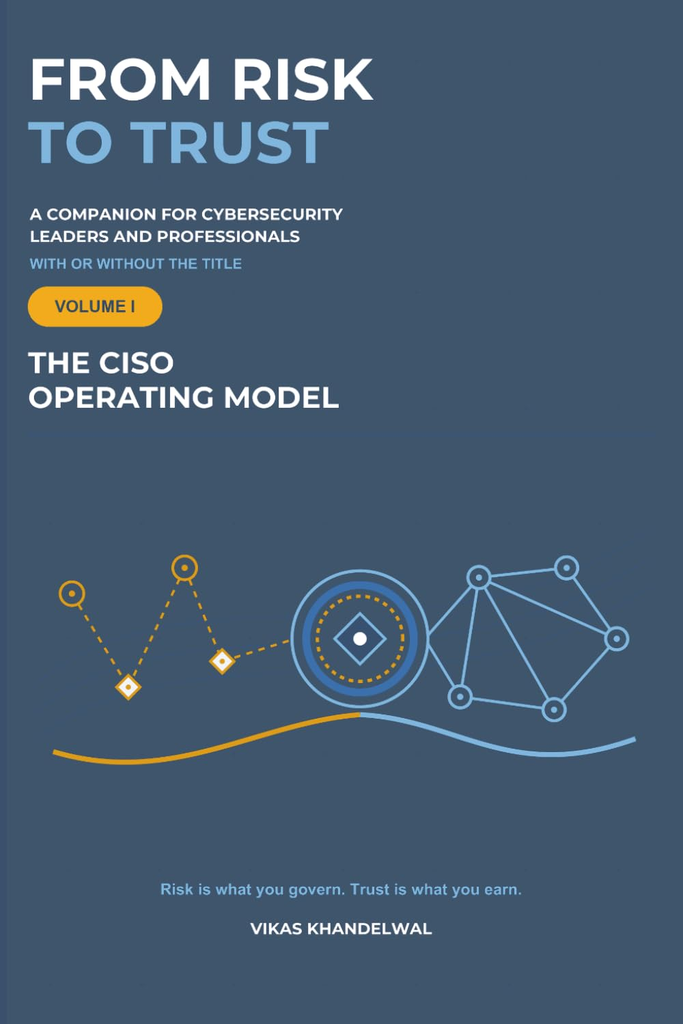
From Risk to Trust: The Cybersecurity Operating Model, Volume I of Vikas Khandelwal’s From Risk to Trust series, addresses these challenges by presenting a structured approach to building and managing a cybersecurity function.
The book focuses on the realities of security leadership, from establishing credibility during the first 90 days to developing governance, communicating risk in business terms, and creating evidence that demonstrates accountability. Rather than treating compliance as the ultimate objective, it emphasises building an operating model that connects security decisions with business priorities and measurable outcomes.
Book Details
| Detail | Information |
|---|---|
| Book Title | From Risk to Trust: The Cybersecurity Operating Model |
| Author | Vikas Khandelwal |
| Series | From Risk to Trust, Volume I |
| Publication Date | August 15, 2026 |
| Language | English |
| Print Length | 546 pages |
| Amazon Link | View on Amazon |
Review of From Risk to Trust: The Cybersecurity Operating Model
One of the most relevant aspects of From Risk to Trust is its recognition that cybersecurity leadership involves much more than technical expertise. Security leaders frequently become accountable for risks that depend on decisions made by other departments. This creates a gap between responsibility and authority, making governance, communication, and organisational influence essential parts of the role.
Vikas Khandelwal addresses this challenge by focusing on how security leaders can build an effective operating model. The discussion of the first 90 days and the development of momentum through day 180 is particularly relevant to new CISOs and security managers preparing to take on broader responsibilities. It highlights the importance of establishing priorities, building credibility, and creating a foundation for sustainable security operations.
Another important theme is the integration of established cybersecurity and risk management frameworks. The book brings together ISO/IEC 27001, ISO/IEC 27002, NIST CSF 2.0, NIST SP 800-53, SOC 2, CIS Controls, the CSA Cloud Controls Matrix, COBIT, ISO 31000, and FAIR within a unified leadership approach. For professionals working across multiple standards and compliance requirements, this framework-oriented perspective can help connect individual controls with wider organisational objectives.
The book also examines how security leaders can translate technical risks into business decisions. Topics such as risk appetite, business cases, indicators, board reporting, and governance emphasise the importance of communicating security priorities in terms that decision-makers can understand and act upon.
Equally significant is its focus on evidence and accountability. Customers, auditors, and regulators often require clear demonstrations of how risks are managed. The book’s emphasis on ownership, follow-through, and documented evidence reflects the operational demands faced by modern security teams.
With its focus on practical leadership challenges, this 546-page volume is aimed at security managers preparing for leadership roles, first-time CISOs, experienced leaders redesigning established functions, and IT professionals who have inherited cybersecurity responsibilities.
Final Thoughts
From Risk to Trust: The Cybersecurity Operating Model by Vikas Khandelwal explores how cybersecurity leaders can move from carrying responsibility to building a function that earns organisational trust. Its combination of governance, risk communication, framework integration, and leadership practices makes it relevant to professionals seeking a more structured approach to security management.
For aspiring CISOs, experienced security leaders, and IT professionals responsible for organisational risk, the book offers a practical perspective on aligning cybersecurity with business priorities.
Its central message is worth remembering: managing risk is a responsibility, but earning trust requires clear decisions, accountable ownership, reliable evidence, and consistent follow-through.