
Change rarely begins when everyone agrees that it is time. More often, it begins when someone notices that an old system is no longer working and decides to do something about it.
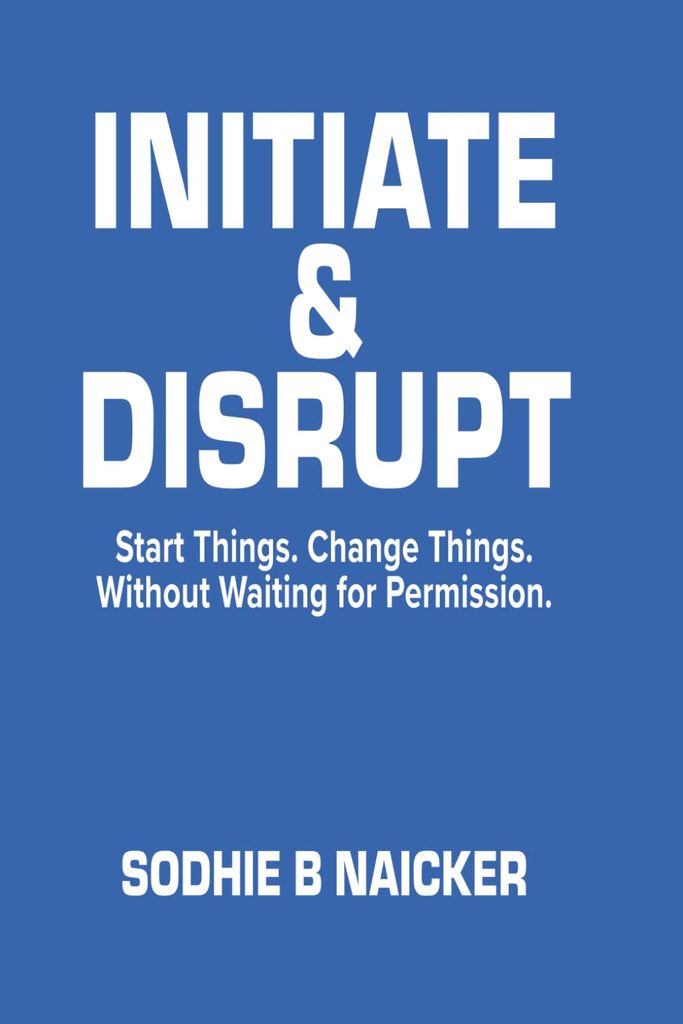
Initiate & Disrupt: Start Things. Change Things. Without Waiting for Permission by Sodhie B Naicker is built around this idea. The book speaks to leaders, founders, teams, and restless professionals who recognize the limitations of business as usual and want a clearer, more purposeful way to create change.
Rather than presenting disruption as change for its own sake, the book focuses on useful disruption, questioning assumptions, identifying outdated habits, and creating space for better ways of working. Its central message is direct: people who shape the future are often those willing to begin before they have permission to do so.
Book Details
| Book Details | Information |
|---|---|
| Title | Initiate & Disrupt: Start Things. Change Things. Without Waiting for Permission |
| Author | Sodhie B Naicker |
| Genre | Leadership, Business, Entrepreneurship, Personal Development |
| Language | English |
| Print Length | 140 pages |
| Publication Date | July 6, 2026 |
| Book Link | Read on Amazon |
Review: Turning the Desire for Change Into Action
At the heart of Initiate & Disrupt is a distinction between people who wait for change and people who actively create it.
Many organizations become comfortable with familiar processes even when those processes no longer produce the results they once did. Old assumptions, stale strategies, and established habits can quietly become barriers to progress.
The book addresses readers who can see these cracks but may need a practical framework for turning that awareness into action.
Understanding Useful Disruption
The concept of disruption is often associated with dramatic transformation. Initiate & Disrupt approaches it from a more practical perspective.
The book focuses on useful disruption, encouraging readers to question what is no longer working and examine the assumptions that keep outdated systems in place.
This makes disruption less about creating chaos and more about creating movement. The objective is to identify opportunities for better work, clearer thinking, and meaningful improvement.
Recognising When a System Is Stuck
An important part of initiating change is recognizing when something has stopped moving forward.
The book encourages readers to look closely at systems, strategies, and habits rather than automatically accepting them because they have always existed.
This can be particularly relevant in professional environments where established processes can become invisible. Once a way of working becomes familiar, questioning it can require deliberate effort.
By encouraging readers to identify when a system is stuck, the book creates a starting point for constructive change.
Challenging Assumptions
Initiate & Disrupt also emphasizes the importance of examining the thinking behind existing systems.
Sometimes the obstacle is not the process itself but the assumptions supporting it. Questioning those assumptions can open possibilities that remain hidden when people simply follow established patterns.
The book therefore connects disruption with curiosity and critical thinking. Before initiating something new, readers are encouraged to understand what needs to change and why.
From Frustration to Movement
A particularly practical idea in the book is the transformation of frustration into movement.
Seeing problems without acting on them can leave individuals and teams feeling stuck. The book encourages readers to move beyond identifying what is broken and toward initiating practical action.
This shift from observation to action is central to its message. Instead of waiting for someone else to solve the problem, readers are encouraged to consider what they can begin themselves.
Starting Without Waiting for Permission
The subtitle, Start Things. Change Things. Without Waiting for Permission, captures the book’s strongest theme.
For leaders, founders, and professionals, the ability to initiate can be just as important as the ability to manage existing systems. New ideas often require someone to take the first step before there is certainty about the outcome.
The book encourages courage, clarity, and purpose as foundations for this kind of action.
This does not mean acting without thought. Rather, the emphasis is on recognizing a meaningful need for change and having the confidence to begin addressing it.
A Book for Restless Professionals
The book is particularly suited to people who feel that business as usual is no longer enough.
Its audience includes leaders seeking new approaches, founders building organizations, teams trying to improve how they work, and professionals who are unwilling to remain limited by outdated ways of thinking.
For these readers, the book’s message can serve as an encouragement to turn dissatisfaction into constructive action.
The Future Belongs to Those Who Begin
One of the book’s most memorable ideas is that the future is not created by people who merely notice what is broken.
Recognizing a problem is important, but meaningful change requires another step: beginning.
That idea gives Initiate & Disrupt its motivational foundation. The book encourages readers to move from awareness to action, from frustration to possibility, and from waiting to initiating.
In this sense, disruption becomes a form of responsibility. When people can see that something needs to change, they can also consider their own capacity to become part of that change.
Final Thoughts
Initiate & Disrupt: Start Things. Change Things. Without Waiting for Permission by Sodhie B Naicker is a concise, action-oriented exploration of useful disruption, initiative, and the courage to challenge business as usual.
The book encourages readers to recognize stuck systems, question assumptions, expose hidden habits, and create room for better work. Its central message is especially relevant for leaders, founders, teams, and professionals who want to turn their awareness of problems into purposeful action.
Ultimately, the book is about beginning. It reminds readers that meaningful change does not always require waiting for perfect conditions, complete certainty, or permission from someone else. Sometimes progress starts when one person decides that it is time to take the first step.