
What if the body has been communicating long before a problem becomes impossible to ignore? What if fatigue, anxiety, disrupted energy, burnout, or other changes are not simply inconveniences to push through, but signals worth noticing?
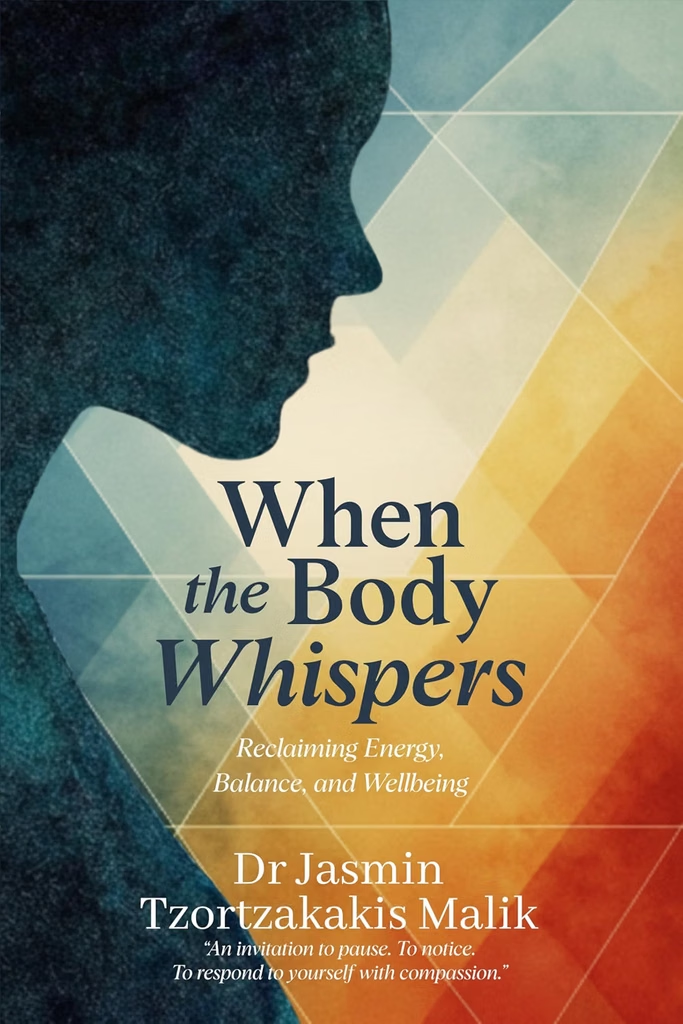
When the Body Whispers: Reclaiming Energy, Balance, and Wellbeing by Dr. Jasmin Tzortzakakis Malik explores these questions through an intersection of neuroscience, physiology, trauma science, psychology, and lived experience. The book considers what happens when people repeatedly override the body’s early signals and what can become possible when they begin listening to those signals again.
Rather than presenting wellbeing as something that can be achieved through a quick solution, the book encourages a steadier relationship with health, one grounded in awareness, safety, rhythm, compassion, and sustainable recovery.
Book Details
| Book Details | Information |
|---|---|
| Title | When the Body Whispers: Reclaiming Energy, Balance, and Wellbeing |
| Author | Dr. Jasmin Tzortzakakis Malik |
| Genre | Health, Wellbeing, Psychology, Neuroscience, Personal Development |
| Language | English |
| Print Length | 269 pages |
| Publication Date | 30 January 2026 |
| Book Link | Read on Amazon India |
Review: Learning to Hear What the Body Is Saying
At the center of When the Body Whispers is a simple but significant idea: the body often responds and adapts long before a diagnosis appears. It compensates, protects, and finds ways to continue functioning, even when it is under prolonged strain.
These early signals can easily be misunderstood. In a culture that often rewards productivity and perseverance, fatigue or exhaustion may be treated as something to overcome rather than something to understand. The book invites readers to reconsider that approach and pay closer attention to what the body may be communicating.
The Body’s Early Warning Signals
One of the defining themes of the book is learning to recognize the body’s signals before they develop into a crisis.
Fatigue, burnout, anxiety, immune vulnerability, and illness are explored within a broader understanding of adaptation and feedback. The book considers how the body can adjust to prolonged stress and overload, while also emphasizing the importance of recognizing when those adaptations are no longer supporting wellbeing.
This perspective encourages greater awareness rather than fear. Instead of simply asking how to keep going, readers are invited to ask what their bodies might be asking them to notice.
Understanding Stress and the Nervous System
The book brings neuroscience, physiology, and trauma science into its exploration of wellbeing. Chronic stress, grief, trauma, long-term health conditions, post-viral illness, and sustained overload are considered in relation to the nervous system and the gradual erosion of energy and resilience.
This scientific grounding is paired with accessible explanations and lived experience, creating a framework for understanding wellbeing that is both informed and deeply human.
The focus on the nervous system also helps connect physical and emotional experiences. Stress is not presented merely as something that happens in the mind. The book explores how prolonged experiences can affect the body’s systems and its ability to regulate, recover, and maintain balance.
From Pushing Through to Listening
A particularly meaningful aspect of When the Body Whispers is its challenge to the idea that more effort is always the answer.
For people who have become accustomed to pushing through exhaustion, stopping can feel difficult or even impossible. The book speaks directly to those who have continued functioning despite prolonged strain and encourages a different relationship with recovery.
Pacing, regulation, and recovery become important parts of this approach. The objective is not to force the body into performance, but to create conditions in which energy and resilience can be rebuilt more sustainably.
The Adaptive Integration Framework
At the core of the book is the Adaptive Integration Framework (AIF), which understands healing as an adaptive spiral.
The framework brings together several dimensions of wellbeing, including science and personal story, regulation and meaning, compassion and agency. This creates a holistic way of looking at health rather than treating individual symptoms or experiences in isolation.
The idea of a spiral is particularly relevant to the book’s overall philosophy. Healing is not presented as a perfectly linear journey with one fixed destination. Instead, it is approached as an evolving process of awareness, adaptation, integration, and renewed understanding.
Science Alongside Lived Experience
Dr. Malik’s perspective as both physician and patient adds a personal dimension to the exploration. The book combines scientific disciplines with lived experience, allowing discussions of health and wellbeing to remain connected to the realities of everyday life.
Reflective narratives complement the scientific material, while practical tools drawn from the Your Health Comes First programme give readers ways to engage with the ideas in a more practical manner.
This combination of accessible science, reflection, and practical guidance makes the book relevant to readers who want to understand their experiences while also developing a more attentive approach to their wellbeing.
Rebuilding Energy Without Forcing It
Another important message is the distinction between genuine recovery and simply pushing harder.
The book encourages readers to consider pacing, regulation, and recovery as part of rebuilding energy. Instead of waiting until the body reaches a point of collapse, readers are encouraged to develop awareness of earlier signals and respond with greater care.
This creates a more sustainable vision of wellbeing, where rest and recovery are not viewed as failures of productivity but as essential foundations for functioning and resilience.
Who Can Benefit From This Book?
When the Body Whispers is written for a broad audience. It can speak to people living with prolonged stress or health challenges, as well as those who have found themselves functioning in what the book describes as survival mode.
Its intended audience includes:
- People experiencing fatigue or burnout
- Those living with long-term health conditions or post-viral illness
- People navigating stress, grief, or trauma
- High achievers who have become accustomed to pushing through
- Carers who continually place their own needs aside
- Clinicians and healthcare professionals
- Non-clinicians interested in understanding the connection between body, mind, and wellbeing
This broad relevance comes from the book’s emphasis on prevention and awareness rather than focusing solely on illness.
Why This Book Matters
In a world where productivity can easily take priority over wellbeing, When the Body Whispers offers a different perspective: health is not something to pursue only after everything else has been completed.
The book’s central message places health at the foundation of everything else. Energy, resilience, meaningful activity, relationships, and productivity all depend upon a body and nervous system that have sufficient capacity to function and recover.
Its emphasis on early awareness is particularly valuable. Paying attention to subtle changes can encourage a more proactive relationship with health and help readers think differently about what their bodies are communicating.
Most importantly, the book approaches wellbeing through compassion. It does not frame exhaustion or difficulty as personal failure. Instead, it invites readers to understand the body’s responses and develop a more supportive relationship with themselves.
A Call for Prevention, Presence, and Compassion
When the Body Whispers ultimately moves beyond the question of how to recover after reaching a breaking point. It asks readers to become more attentive before that point arrives.
The book encourages presence, awareness, pacing, regulation, and compassion. Its message is particularly relevant to people who have spent years believing that resilience means simply continuing, regardless of what the body is saying.
By learning to recognize the whispers before they become louder, readers are invited to approach health with greater patience and understanding.
Final Thoughts
When the Body Whispers: Reclaiming Energy, Balance, and Wellbeing is a thoughtful exploration of the relationship between physiology, stress, trauma, nervous system regulation, energy, and resilience.
Dr. Jasmin Tzortzakakis Malik brings together scientific perspectives, reflective narratives, and practical tools to encourage readers to reconsider how they respond to the body’s signals. At the heart of the book is the Adaptive Integration Framework, which presents healing as an evolving process grounded in safety, rhythm, awareness, compassion, and agency.
For anyone who has kept going when stopping felt impossible, this book offers an invitation to pause and listen. Its underlying reminder is both simple and powerful: wellbeing is not a reward that comes after productivity. It is the foundation that makes a sustainable life possible.