
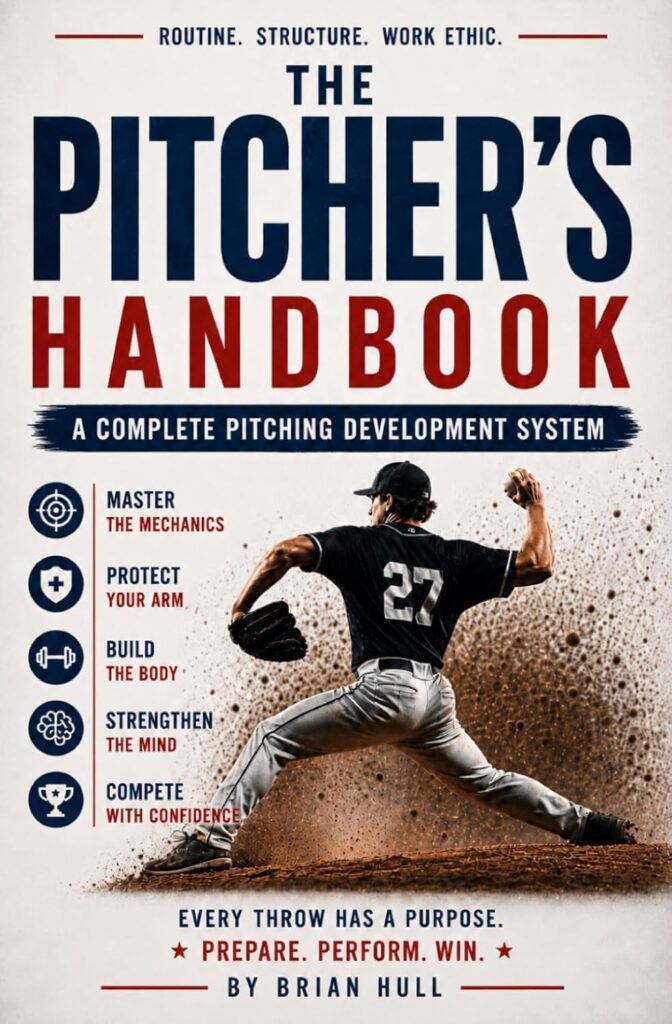
The Pitcher’s Handbook: A Complete Pitching Development System by Brian Hull A Comprehensive Blueprint for Developing Healthy, Confident, and Successful Pitchers
Developing an elite pitcher requires far more than increasing throwing velocity. Long-term success on the mound depends on sound mechanics, proper arm care, mental preparation, structured training, and consistent development throughout the year. The Pitcher’s Handbook: A Complete Pitching Development System by Brian Hull delivers exactly that—a comprehensive, research-based roadmap designed to help pitchers maximize performance while protecting their long-term health.
Drawing on years of experience as a former collegiate pitcher, veteran high school pitching coach, educator, and SHAPE America National Physical Education Teacher of the Year, Brian Hull combines practical coaching experience with evidence-based training principles to create a complete pitching development system suitable for athletes, coaches, and parents alike.
Book Details
| Detail | Information |
|---|---|
| Title | The Pitcher’s Handbook: A Complete Pitching Development System |
| Author | Brian Hull |
| Print Length | 388 Pages |
| Language | English |
| Publication Date | July 10, 2026 |
| Genre | Sports, Baseball, Coaching, Athletic Development |
| Amazon Link | https://a.co/d/05DS5qlZ |
Review
One of the book’s greatest strengths is its holistic approach to pitcher development. Rather than concentrating solely on throwing harder, Brian Hull presents pitching as a complete athletic discipline that requires technical skill, physical preparation, mental resilience, and intelligent long-term planning. This broader perspective makes the handbook valuable for players at every stage of development.
The section on pitching mechanics provides a strong foundation by breaking complex movements into teachable progressions. Instead of offering isolated tips, the author explains why efficient mechanics matter and how proper movement patterns contribute to both improved performance and reduced injury risk. This emphasis on understanding the “why” behind each concept helps readers develop smarter training habits rather than simply memorizing drills.
Another standout feature is the book’s focus on arm health and injury prevention. Warm-up routines, recovery strategies, throwing progressions, long toss programs, arm care protocols, and workload management are integrated throughout the handbook, reinforcing the idea that durability is just as important as performance. This balanced philosophy encourages athletes to prioritize sustainable development over short-term gains.
Mental performance receives equal attention alongside physical preparation. Brian Hull discusses confidence, focus, composure, goal setting, and game-day preparation as essential components of pitching success. By addressing the psychological aspects of competition, the handbook recognizes that effective pitchers must be mentally prepared to perform under pressure as well as physically capable.
The book also excels in its year-round developmental structure. Rather than viewing training as something that occurs only during the competitive season, the author outlines a comprehensive annual system that includes off-season development, in-season maintenance, recovery planning, and continuous skill refinement. This organized framework provides readers with a practical roadmap for long-term improvement.
Advanced topics such as pitch design, command development, pitch sequencing, defensive responsibilities, velocity development, and strength and conditioning further expand the handbook’s value. Coaches will also appreciate the inclusion of evaluation tools, coaching checklists, player development templates, and planning resources that simplify the process of tracking athlete progress and building individualized development plans.
Despite its depth, the writing remains accessible and highly practical. Brian Hull successfully combines coaching expertise with clear explanations, making complex training concepts understandable for players, parents, and coaches alike.
Why This Book Matters
In today’s competitive baseball environment, many athletes search for quick solutions to increase velocity or improve performance. The Pitcher’s Handbook emphasizes a more sustainable philosophy by demonstrating that long-term success comes from disciplined habits, sound mechanics, consistent preparation, and healthy development.
Its research-based approach helps readers understand that injury prevention, physical conditioning, mental preparation, and technical refinement work together to produce lasting improvement. Rather than promoting shortcuts, the handbook encourages patient, intentional development that benefits pitchers throughout every stage of their careers.
Whether used by youth coaches building strong fundamentals or experienced athletes preparing for collegiate competition, the book provides practical guidance that remains relevant across different levels of baseball.
Final Thoughts
The Pitcher’s Handbook: A Complete Pitching Development System is an outstanding resource for anyone committed to developing better pitchers through structured, evidence-based coaching. Brian Hull combines technical expertise, practical coaching strategies, and long-term athletic development principles into a comprehensive guide that extends far beyond traditional pitching instruction.
For pitchers, coaches, parents, and baseball programs seeking a complete system rather than isolated drills, this handbook serves as an invaluable reference for building healthy habits, improving performance, and achieving consistent success on the mound.