
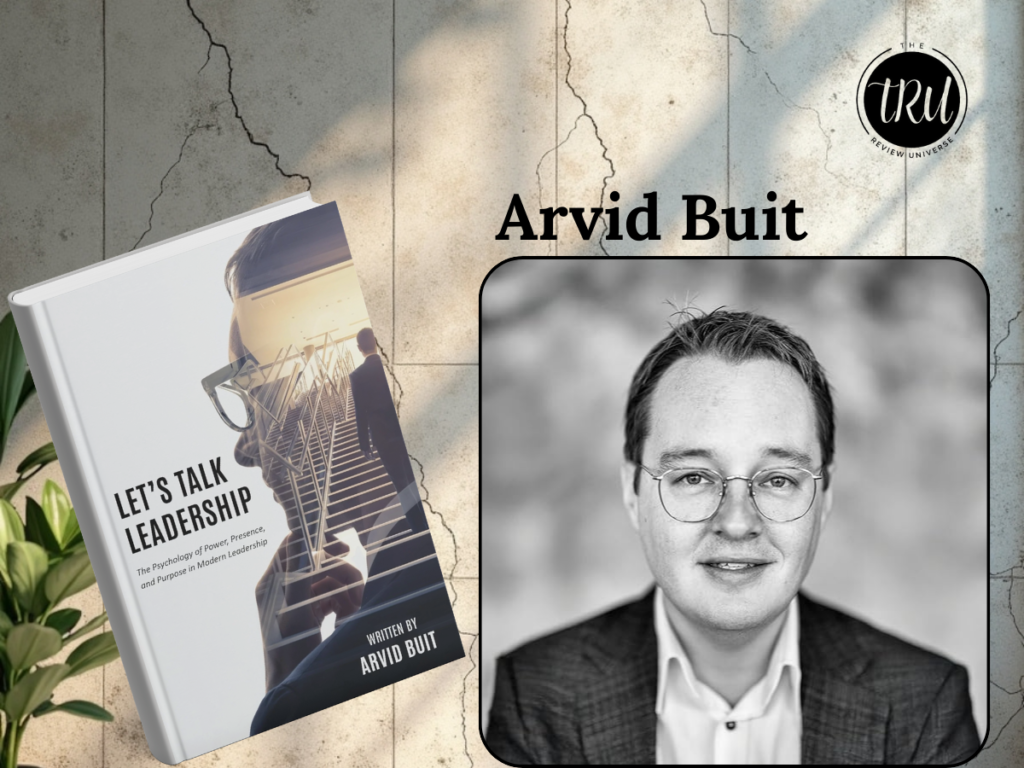
In a world obsessed with leadership frameworks, productivity hacks, and performance metrics, one essential truth is often ignored: leaders do not lead from techniques they lead from who they are.
That is the central argument of Let’s Talk Leadership: The Psychology of Power, Presence, and Purpose in Modern Leadership, a psychologically grounded exploration of what truly shapes leadership behavior and organizational culture.
Rather than offering another checklist of leadership skills, this book turns inward examining the emotional, psychological, and narrative forces that define how leaders show up, make decisions, and influence others.
Leadership as an Inner Journey, Not a Skillset
Written by executive coach and C-suite advisor Arvid Buit, Let’s Talk Leadership challenges a common misconception: that leadership can be fixed with surface-level tools.
Drawing from years of close work with CEOs, founders, and executive teams, the book argues that leadership is formed long before a title is earned. Early experiences, emotional patterns, and personal narratives silently shape authority, presence, and decision-making—often without the leader realizing it.
Organizations, the book suggests, are mirrors. They reflect the inner state of those who lead them.
Why Leadership Development Often Fails
One of the book’s most striking contributions is its critique of traditional leadership development. Many programs focus on behavior without addressing identity. As a result, change remains temporary.
Let’s Talk Leadership explains why:
- leaders carry unresolved personal narratives into the workplace
- emotional signals travel faster than strategy
- authority is felt before it is explained
- strong leadership is often misunderstood or resisted
Without psychological awareness, even the best strategies collapse under pressure.
Three Parts, One Coherent Framework
The book is structured into three distinct yet connected parts, offering both insight and application.
Part I: The Psychology of Leadership
This section explores how leadership behavior is shaped by personal history. It examines emotional transmission in teams, resistance to authority, and why leadership presence matters more than control.
Part II: Five Perspectives on Leadership
Readers are introduced to five analytical lenses:
- The Collective – culture and shared identity
- The Strategist – vision and direction
- The Father – safety and authority
- The Decision-Maker – clarity and responsibility
- The Creative – innovation and growth
These perspectives help decode leadership dynamics across organizations.
Part III: A Seven-Step Development Method
The final section translates psychology into practice. Leaders are guided through assessing identity, uncovering blind spots, improving communication, building discipline, navigating change, and inspiring others—without relying on quick fixes.
Who This Book Is Really For
Let’s Talk Leadership is written for:
- executives and senior managers
- founders and entrepreneurs
- HR professionals and organizational leaders
- coaches and leadership consultants
- anyone serious about long-term leadership growth
It speaks to readers who sense that leadership problems are rarely technical and almost always human.
Book Details
| Detail | Information |
|---|---|
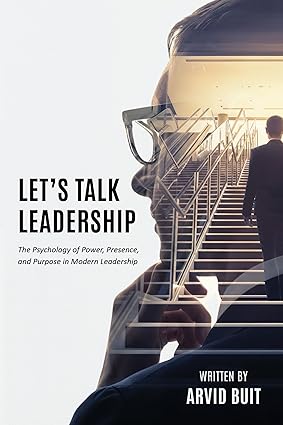
| Title | Let’s Talk Leadership: The Psychology of Power, Presence, and Purpose in Modern Leadership |
| Author | Arvid Buit |
| Print Length | 274 pages |
| Language | English |
| Publication Date | 30 November 2025 |
| Buy Link | https://a.co/d/ibweuj5 |
| Genre | Leadership, Psychology, Organizational Development |
Why This Book Matters Now
At a time when organizations face uncertainty, burnout, and trust erosion, leadership cannot rely on authority alone. It must be conscious, psychologically grounded, and authentic.
Let’s Talk Leadership makes a compelling case: leaders who understand themselves create stability, meaning, and direction for others.
This is not a motivational book. It is a mirror one that invites leaders to look honestly at who they are before deciding how they lead.
Pingback: Review & Summary : Echoes That Built Eternity: Poems on the Soul’s Eternal Architecture By Daksh Siwasia - The Review Universe
Pingback: Review : The Quiet of Tomorrow By Ifeoma Dorothy C. Okere - The Review Universe
Pingback: Wheels Of Fate: And Other Stories By Jayanta Madhav - The Review Universe