
Workplace stress has become a familiar part of modern professional life. Tight deadlines, demanding responsibilities, difficult conversations, and the pressure to perform can gradually affect not only productivity but also relationships, emotional well-being, and a person’s sense of purpose.
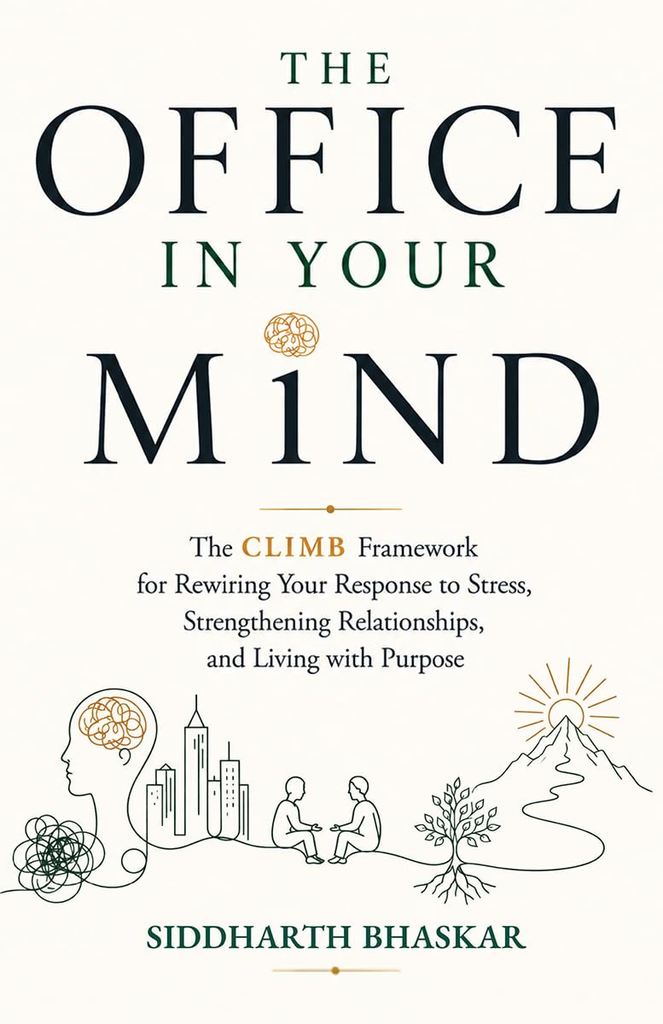
The Office in Your Mind: The CLIMB Framework for Rewiring Your Response to Stress, Strengthening Relationships, and Living with Purpose by Siddharth Bhaskar explores how professionals can change their response to these everyday challenges. Rather than treating stress as something that must simply be endured, the book encourages readers to develop greater awareness of their thoughts, emotions, and reactions.
Designed as a practical guide, it combines the CLIMB framework with visual diagrams, self-reflection journals, and daily mindfulness practices to help readers approach professional life with greater calm, clarity, and intention.
Book Details
| Detail | Information |
|---|---|
| Book Title | The Office in Your Mind: The CLIMB Framework for Rewiring Your Response to Stress, Strengthening Relationships, and Living with Purpose |
| Author | Siddharth Bhaskar |
| Language | English |
| Print Length | 200 pages |
| Publication Date | 26 October 2026 |
| Genre | Workplace Wellbeing, Personal Development, Mindfulness |
| Amazon Link | View on Amazon |
Review of The Office in Your Mind
One of the book’s most relevant ideas is that workplace stress is not determined only by external circumstances. The way people interpret situations, manage emotions, and respond to pressure can also shape their experience. This perspective encourages professionals to develop a more conscious relationship with their thoughts rather than reacting automatically to every challenge.
The CLIMB framework serves as the central structure of the book, offering readers a step-by-step approach to personal and professional development. Its emphasis on practical models and reflection makes the subject approachable for readers who want more than general advice about staying positive or working harder.
Emotional regulation is another important theme. In professional environments, difficult situations can quickly lead to frustration, anxiety, or misunderstandings. Learning to recognise emotional responses and create space before reacting can help individuals communicate more thoughtfully and handle workplace challenges with greater composure.
The book also highlights the importance of professional relationships. Communication, empathy, and self-awareness play a significant role in how people work together. By encouraging readers to strengthen these skills, Bhaskar connects personal development with healthier workplace interactions. The message is particularly relevant for managers, team leaders, and employees who regularly navigate complex professional relationships.
Another valuable aspect is its focus on purpose. A fulfilling career is not necessarily defined by constant achievement or external recognition. Finding meaning in daily responsibilities and understanding how work connects with personal values can help professionals develop a more sustainable approach to their careers.
The inclusion of visual diagrams, self-reflection journals, and daily mindfulness practices adds a practical dimension to the book. These tools are intended to help readers move beyond understanding concepts and begin applying them in their everyday routines.
Overall, The Office in Your Mind presents professional well-being as an ongoing practice of awareness, emotional balance, meaningful relationships, and purposeful action.
Final Thoughts
The Office in Your Mind is a thoughtful resource for professionals who want to manage workplace pressure more consciously and build healthier relationships at work. Its combination of the CLIMB framework, mindfulness practices, and reflective exercises makes it relevant to corporate employees, leaders, and freelancers alike.
Siddharth Bhaskar’s central message is that professional fulfilment begins not only with changing the workplace around us, but also with understanding and improving the way we respond to it.
For readers seeking greater mental clarity, emotional awareness, and a more purposeful working life, this book offers a practical starting point.