
Starting a business requires more than a promising idea. Founders also need to understand how money flows through a company, how investors evaluate opportunities, and what financial decisions can determine whether a business survives or struggles to grow. While startup culture often celebrates funding announcements and big valuations, the financial realities behind these milestones are not always clearly understood.
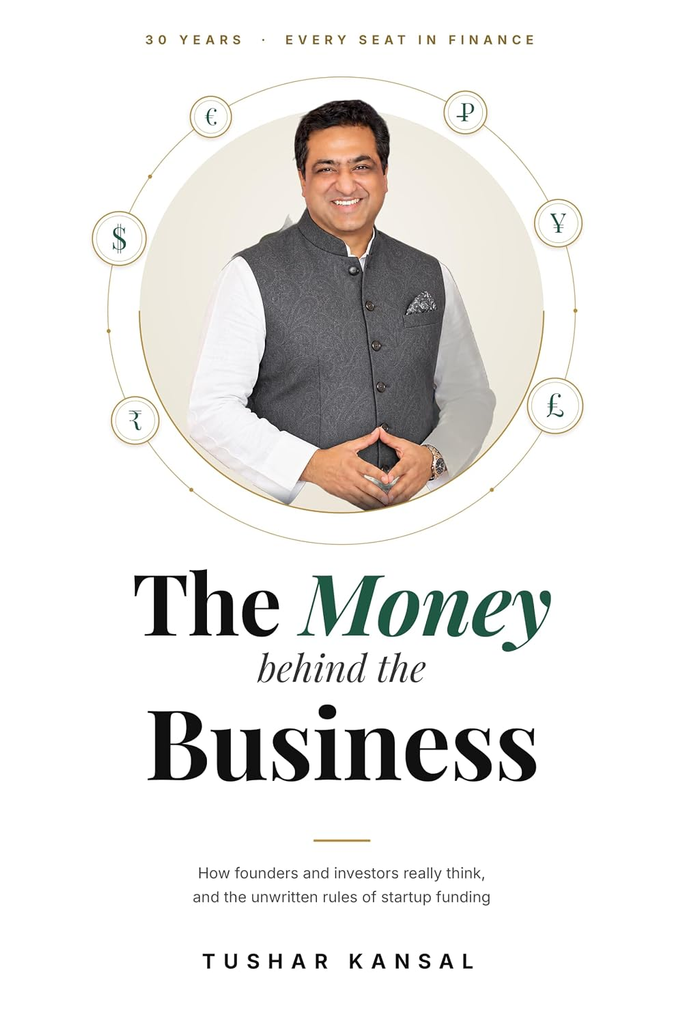
The Money Behind the Business: How Founders & Investors Really Think, and the Unwritten Rules of Startup Funding by Tushar Kansal explores these realities from both sides of the investment table. Drawing on 30 years of experience in finance, the author explains the financial principles, investor expectations, and funding decisions that shape businesses. The book aims to make startup finance easier to understand through practical examples, real-world cases, and straightforward explanations.
Book Details
| Detail | Information |
|---|---|
| Book Title | The Money Behind the Business: How Founders & Investors Really Think, and the Unwritten Rules of Startup Funding |
| Author | Tushar Kansal |
| Book Series | Tushar Kansal Book 1 |
| Language | English |
| Print Length | 144 pages |
| Publication Date | October 20, 2026 |
| Genre | Business, Startup Funding, Finance, Entrepreneurship |
| Amazon Link | View on Amazon |
Review of The Money Behind the Business
One of the book’s most relevant ideas is that having a good business concept does not automatically make a company attractive to investors. Investors evaluate opportunities through a different lens, considering risk, financial sustainability, growth potential, and the ability of a business to deliver returns. The book explores why even promising companies can face rejection and encourages founders to understand the questions investors may be asking behind the scenes.
A particularly useful aspect is its focus on valuation and dilution. These are important concepts for founders, especially those entering their first funding discussions. Understanding how a company’s valuation is determined and how much ownership founders may give away can significantly influence long-term financial outcomes. Rather than treating funding as an uncomplicated achievement, the book encourages readers to consider what each investment actually means for their business and ownership.
The discussion also challenges the assumption that more funding is always better. Raising substantial capital can create opportunities, but it can also introduce financial pressure, unrealistic growth expectations, and decisions that become difficult to reverse. By examining how excessive funding can harm a promising business, the book presents a more balanced understanding of startup financing.
Another valuable area is its exploration of alternatives to conventional venture capital. SME funding and debt financing are often overlooked by founders who associate startup growth primarily with equity investment. The book brings attention to these quieter financing options and helps readers recognise that different businesses may require different funding strategies.
What makes the subject more accessible is the author’s effort to explain financial terminology through simple examples. Concepts such as runway and term sheets can initially feel intimidating to first-time founders, but breaking them down into practical situations makes them easier to understand. The inclusion of real business cases from the US, Europe, APAC, GCC, and India also gives the discussion an international perspective.
With experience spanning Big Four advisory, venture capital, investing, treasury, debt management, and CFO responsibilities, Tushar Kansal brings multiple financial perspectives to the subject. His experience advising more than 5,000 startups, SMEs, and growth-stage companies adds relevance to a book designed for readers who want to understand not just how funding works, but why financial decisions matter.
Final Thoughts
The Money Behind the Business is a useful read for aspiring entrepreneurs, startup founders, business students, professionals considering entrepreneurship, and investors interested in understanding the other side of funding decisions.
Its strongest contribution is encouraging readers to look beyond funding announcements and headline valuations. By explaining investor thinking, ownership dilution, financial risk, and alternative funding options, Tushar Kansal offers a practical introduction to the financial realities of building a business.
Ultimately, the book reinforces an important lesson: raising money is only one part of building a successful company. Knowing how to use it, manage it, and protect the value of the business matters just as much.