
At first glance, Modeling Ruined My Life sounds like a story of regret. But after reading the manuscript, the title turns out to be deliberately misleading. Ian Layton’s memoir is less about how modeling destroyed his life and more about how a chaotic career, questionable industry practices, rejection, vanity, money, relationships, and personal mistakes ultimately shaped the person he became.
The book follows Layton from the end of his hockey career in Canada into the international modeling industry. What begins as an attempt to find direction eventually takes him through Milan, Paris, Germany, Japan, Korea, Turkey, and other parts of the fashion world. Along the way, he experiences both the opportunities and the darker realities behind the glamorous image of modeling.
Book Details
| Detail | Information |
|---|---|
| Title | Modeling Ruined My Life |
| Author | Ian Layton / I. David |
| Print Length | 101 pages |
| Language | English |
| Genre | Memoir, Fashion, Biography, Personal Journey |
| Book Link | Amazon India |
| Short Link | Amazon Short Link |
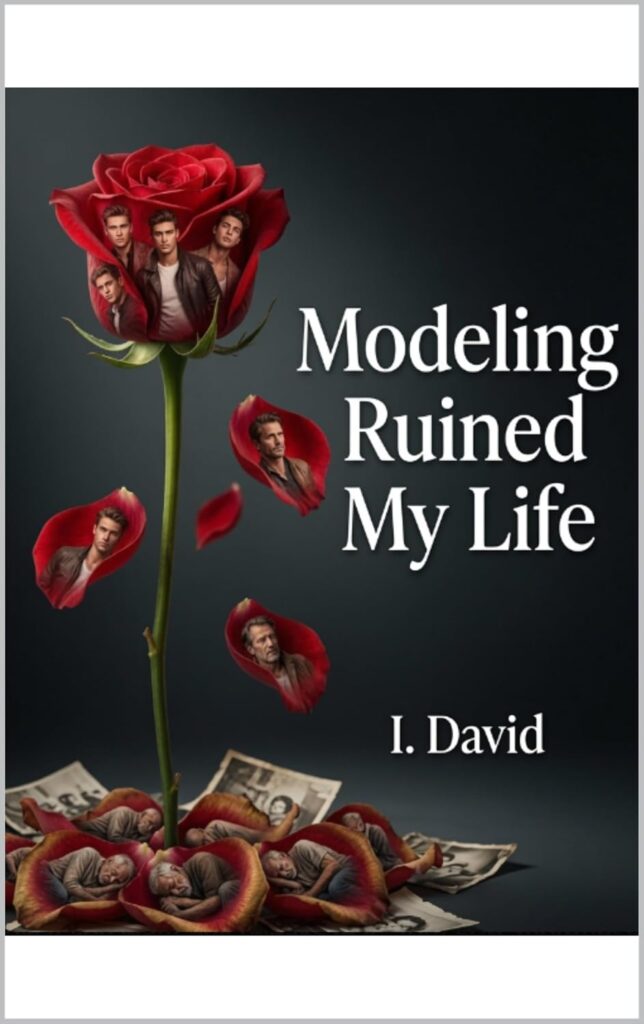
Book Review
What makes Modeling Ruined My Life interesting is that it doesn’t present the modeling industry through the polished lens readers might expect. Instead, Ian Layton offers a blunt, often humorous, and sometimes uncomfortable account of what happens behind the photographs, runways, agencies, castings, and promises of fame.
The journey begins at a difficult point in Layton’s life. After his hockey ambitions begin to fade, a relationship ends, and his father dies, he finds himself without a clear direction. Modeling appears to offer an attractive alternative—money, travel, beautiful people, and the possibility of becoming someone important.
But the reality arrives quickly.
One of the book’s recurring subjects is deception. Layton describes agents promising opportunities, charging aspiring models for classes and competitions, making exaggerated claims, and sometimes withholding important information. His early experiences make him realize that aspiring models can be particularly vulnerable because the industry knows how to appeal to their vanity and ambition.
That idea becomes one of the memoir’s strongest themes: vanity can make people easier to manipulate.
Layton openly admits that he entered modeling with plenty of ego himself. He believed he was good-looking enough to succeed and was attracted to the lifestyle that came with the profession. Instead of pretending to have understood the industry from the beginning, he acknowledges how easily he believed promises that fed his ambitions.
This self-awareness makes the memoir more compelling. The author doesn’t position himself simply as the victim of a corrupt system. He repeatedly recognizes his own poor decisions, unrealistic expectations, impulsive behavior, and willingness to believe what he wanted to hear.
The Reality Behind the Glamour
The international modeling experience becomes a series of contrasting experiences.
Milan introduces him to the demanding nature of castings and the unpredictability of getting paid work. Paris brings opportunities but also its own adventures and humiliations. Germany proves comparatively straightforward. Japan offers the excitement of a major contract, while Korea exposes him to serious disputes over agency practices and money.
The contrast is important because the book never treats “the modeling industry” as a single experience. Different countries, agencies, clients, and people create very different realities.
In Korea, Layton eventually establishes an agency that becomes known for not taking advantage of models financially. That experience gives him an opportunity to challenge some of the practices he had previously encountered. Yet even that success doesn’t last forever, and another business relationship ends badly.
This cycle success, disappointment, reinvention, and another setback—continues throughout the memoir.
Rejection and Identity
Another particularly strong section deals with the psychological effect of rejection.
For models, rejection isn’t an occasional event. It can happen repeatedly in a single day. Layton connects this constant judgment with the “model complex”: the tendency to measure yourself against other people’s appearance, success, status, and perception.
His answer is surprisingly simple: stop trying to become someone else.
The book argues that comparison can become destructive, particularly in an industry where people are constantly evaluated against one another. Layton eventually recognizes that he is not another model and doesn’t need to be. Learning to accept his own identity becomes more valuable than trying to fit an external definition of success.
Money, Success, and the “Chosen Few”
Money is another major theme.
Layton doesn’t romanticize the financial side of modeling. The possibility of earning large amounts can be intoxicating, particularly when work arrives suddenly after long periods of uncertainty. But he also recognizes how easily quick money can create irresponsible habits and unrealistic expectations.
His discussion of the industry’s “chosen few” is also revealing. Not everyone reaches the highest level of fashion, and being successful in one market doesn’t necessarily mean being successful everywhere. Instead of constantly trying to compete at the industry’s highest level, Layton learns to find markets where his particular strengths have value.
That becomes one of the memoir’s more practical observations: you don’t necessarily have to win the biggest game if you can find the game where you belong.
When Modeling Stops Being the Point
The memoir becomes more reflective as Layton approaches the end of his modeling career.
After more than a decade in the international circuit, he is exhausted by the dishonesty and instability. He begins looking for a life beyond modeling, even though the industry has become deeply embedded in his identity.
The transition is not immediate. There are attempts to return to modeling and thoughts about making a comeback. But his personal life begins to take priority. Becoming a father changes his perspective dramatically, and he realizes that the life he once imagined for himself—family, a home, stability, and a quieter existence—has actually arrived in a different form.
This is where the title finally reveals its irony.
Why the Title Is Misleading
The most satisfying part of the book is its final reversal.
By the end, Layton rejects the idea that modeling actually “ruined” his life. Instead, he recognizes that the profession gave him experiences he would never otherwise have had: international travel, friendships, relationships, opportunities, and ultimately a life he values.
The final chapter, appropriately titled “Do It on Purpose,” reframes the entire memoir.
The book isn’t saying that readers should enter modeling. Nor is it simply warning them to stay away. Instead, Layton’s larger message is about living consciously and taking responsibility for the choices that shape your life.
He looks back at the mistakes, the lies, the failures, the relationships, the money, the travel, and the uncertainty and concludes that he wouldn’t erase those experiences because doing so might also erase the life he eventually built.
What Makes This Memoir Stand Out
Modeling Ruined My Life stands apart from conventional celebrity or fashion memoirs because Layton doesn’t try to make himself look perfect.
He admits to vanity.
He admits to bad decisions.
He admits to believing things he shouldn’t have believed.
He admits to making mistakes in relationships and business.
And, importantly, he recognizes that some of the problems he experienced were created or amplified by his own choices.
That honesty gives the memoir its personality.
The manuscript’s structure also reflects the author’s long journey. Its twenty chapters move through subjects including deception, rejection, money, photographers, styling, powerful people, nightlife, success, excess, identity, institutionalization, transition, dreams, fate, and finally intentional living.
Final Thoughts
Modeling Ruined My Life is ultimately not a book about a ruined life.
It is a book about a life that took a very unexpected route.
Ian Layton enters modeling looking for money, excitement, identity, and a new direction. What he finds is a complicated world filled with opportunity and exploitation, friendship and betrayal, glamour and exhaustion, success and rejection.
The memoir’s greatest strength is that Layton doesn’t try to turn those contradictions into a neat inspirational lesson. He simply tells the story in his own irreverent voice and allows the reader to see how the experiences changed him.
The title promises destruction.
Read More : Leadership and Management Made Simple by Puvanesvarar Mailvaganam – Book Review & Key Insights
The ending offers something very different: acceptance.
Modeling didn’t ruin his life. In his view, it became one of the strange and difficult roads that eventually gave him his life.