
Leadership becomes more difficult as organizations become more complex. The problems leaders face rarely have a single cause, and the decisions that appear straightforward on the surface can involve business pressures, people, culture, relationships, emotions, timing, and forces outside the organization.
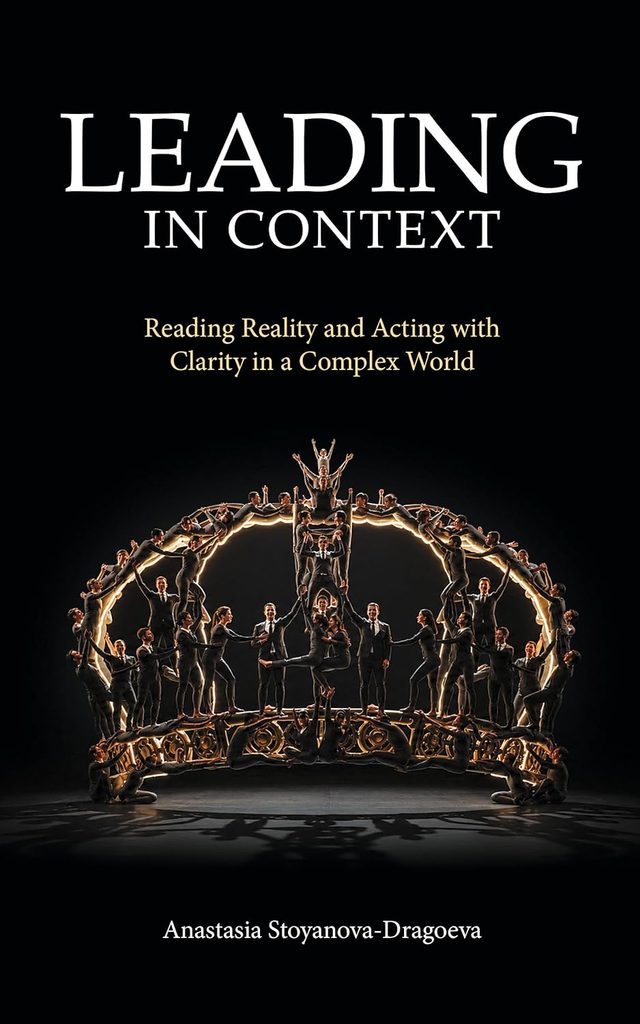
Leading in Context: Reading Reality and Acting with Clarity in a Complex World takes this complexity as its starting point.
Rather than presenting leadership as a collection of universal formulas, the book explores the importance of perception, judgment, context, and interpretation. It is aimed at readers who have moved beyond the search for simple leadership answers and want to develop the ability to understand what is actually happening before deciding how to respond.
Drawing on more than two decades of international executive and People & Culture experience, the book combines leadership experience, organizational examples, and reflection to examine how leaders can make more appropriate decisions in complex environments.
Book Details
| Book Details | Information |
|---|---|
| Book Title | Leading in Context: Reading Reality and Acting with Clarity in a Complex World |
| Genre | Leadership, Management, Organizational Development, People & Culture |
| Language | English |
| Print Length | 246 pages |
| Publication Date | July 6, 2026 |
| Book Link | Amazon |
| Author | Anastasia Stoyanova-Dragoeva |
Why Context Matters in Leadership
One of the central ideas in Leading in Context is that leadership decisions cannot always be separated from the environment in which they occur.
A leadership approach that works in one organization, culture, or situation may not necessarily work in another.
Business realities interact with organizational dynamics. Cultural influences affect relationships. Emotions influence decisions. Timing changes the consequences of an action. External forces can alter circumstances without warning.
Understanding these interconnected elements is therefore an important part of effective leadership.
The book encourages leaders to look beyond isolated problems and develop the ability to interpret the larger context surrounding them.
Beyond Universal Leadership Formulas
Leadership literature often provides frameworks, models, and principles designed to make complex problems easier to understand.
While such tools can be useful, Leading in Context takes a different position. It suggests that leadership cannot be mastered through frameworks alone.
Experienced leaders eventually encounter situations where there is no obvious formula to follow.
Two organizations can face what appears to be the same problem but require completely different responses because their people, cultures, histories, relationships, and circumstances are different.
This is where judgment becomes important.
Developing the Ability to Read Reality
The book presents leadership as an ongoing process of learning how to interpret organizational reality.
This involves more than observing what is happening. Leaders must consider what lies beneath visible events and understand how different factors influence one another.
Experience plays an important role, but experience alone is not enough.
The book emphasizes observation, reflection, meaningful examples, and continuous learning as ways leaders gradually refine their ability to recognize patterns and understand complex situations.
Over time, these practices can contribute to better judgment.
Leadership in Complex Organizations
Modern organizations are rarely static.
Leaders may find themselves managing transformation, mergers and acquisitions, leadership transitions, organizational uncertainty, cultural differences, and internal conflict.
Each situation creates its own combination of pressures.
In such environments, leadership requires the ability to interpret what is happening before deciding what should happen next.
Leading in Context therefore approaches leadership as a practice of continuous interpretation rather than a fixed collection of techniques.
The Interaction Between Business and People
A significant part of contextual leadership involves understanding that business outcomes and people-related issues are interconnected.
Business decisions affect people.
People influence organizational performance.
Culture shapes behavior.
Relationships influence trust.
Emotions can influence how individuals respond to change.
External circumstances can affect all of these elements simultaneously.
The book encourages leaders to consider these layers together rather than treating business and people as completely separate areas of leadership.
Trust, Authenticity and Emotional Maturity
Beyond organizational analysis, Leading in Context emphasizes qualities that remain important regardless of technological or organizational change.
These include:
- Trust
- Authenticity
- Emotional maturity
- Discernment
- Continuous learning
- Sound judgment
- Reflection
These qualities contribute to a leader’s ability to respond thoughtfully rather than react automatically.
They also support the human side of leadership, particularly when organizations are going through uncertainty, conflict, transformation, or change.
Learning Through Experience
The book draws from more than two decades of international executive and People & Culture experience across global organizations.
This experience includes organizational transformations, mergers and acquisitions, leadership transitions, and work across more than forty cultural environments.
These experiences provide the foundation for the book’s exploration of contextual leadership.
Rather than treating leadership as something that can be mastered once and for all, the book presents it as a continuous process of refinement.
Every new situation provides another opportunity to observe, interpret, reflect, and improve judgment.
Who Is Leading in Context For?
The book is designed for a broad group of readers interested in deeper approaches to leadership.
It may be particularly relevant for:
- Experienced leaders
- Emerging leaders
- HR executives
- People & Culture professionals
- Mentors
- Professionals preparing for leadership responsibilities
- First-time managers
- Senior executives
For emerging leaders, the book offers a way to think about leadership beyond basic management techniques.
For experienced executives, it addresses a familiar challenge: the most difficult decisions often do not have simple answers.
A Second-Curve Approach to Leadership
The book describes itself as second-curve reading for people who have moved beyond the search for simple answers and universal formulas.
This perspective recognizes that leadership development does not stop once someone learns a set of management frameworks.
Instead, experienced leadership requires increasingly refined perception.
The question becomes less about asking, “Which leadership model should I use?” and more about asking, “What is actually happening here, and what response is appropriate for this particular situation?”
Making Contextually Appropriate Decisions
The ultimate objective of contextual leadership is not complexity for its own sake.
It is better decision-making.
When leaders understand the different layers influencing a situation, they can make decisions that are more appropriate to the circumstances.
This can create better outcomes for both the organization and the people within it.
The book therefore connects clarity with humanity, sound judgment, and depth.
Final Thoughts
Leading in Context: Reading Reality and Acting with Clarity in a Complex World presents leadership as a continuous practice of seeing, interpreting, reflecting, and deciding.
Its central message is that leaders cannot rely exclusively on universal formulas because organizations and people operate within constantly changing contexts.
Business conditions, organizational dynamics, culture, relationships, emotions, timing, and external forces all interact.
For readers interested in contextual leadership, organizational complexity, executive leadership, People & Culture, management judgment, leadership development, and decision-making, this book offers a reflective approach to understanding what effective leadership requires when straightforward answers are no longer enough.
Read More : Life Where It All Began: The Prequel Part 2 by Aditya Nair